Maynard serial killings
A Killer’s MindThe Maynard serial killings are a series of murders that make a small town’s familiar routines feel unsafe and draw the young Zoe Bentley into an investigation she is not equipped to influence. The deaths of Beth Hartley, Jackie Teller, and Clara are not only crimes for Zoe to follow: they enter her life through school, family, and the community’s accumulating fear. As the case develops, the distance between what residents know, what they repeat, and what investigators can establish becomes central to its human cost.
The first deaths and the limits of what is known
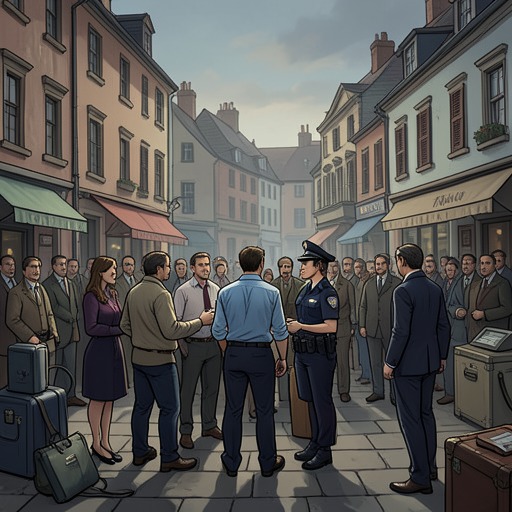
Zoe learns that a body has been found near the White Pond Road Bridge from Heather, who heard her father and a neighbor discussing it. The early account is fragmentary: the victim is said to be a girl, and that she was naked. At school, the fragments multiply into more disturbing rumors, including claims about what had happened to the victim before her death. Zoe has no way to verify these details. Their force comes from circulation itself, and the lack of reliable information leaves room for frightening images to take hold.
The victim is eventually identified as Beth Hartley, a twenty-one-year-old secretary for a local accountant. Zoe sees Beth’s photograph in the newspaper and wonders whether she might have passed her around Maynard, a small town where a stranger could also be someone familiar from an ordinary errand. The paper offers little else beyond saying that an investigation is underway. At the Assabet River, Zoe tries to separate the actual place from the stories she has heard about it. The contrast does not undo her fear; it leaves her with both fear and an unexpected agitation and thrill at the reality of a mystery unfolding nearby.
Five days before the family scene dated October 23, another young woman, Jackie Teller, has been killed. Jackie is connected to Zoe’s household: Zoe’s mother knew her through a book club and had attended Jackie’s sixteenth birthday, two years earlier. She has now also attended Jackie’s funeral. The second death makes the danger personal to Zoe’s mother, whose behavior changes as the family tries to protect the girls. She insists that they be driven to and from school, sets a time for Zoe to be home before dark, and panics when Andrea runs outside with a ball. Zoe comforts her younger sister after their mother brings her back indoors. With Halloween approaching, the town expects that trick-or-treating will not take place.
The account of Jackie’s death reaches Zoe through Roy, Heather’s nineteen-year-old brother, who took part in the search. Jackie had gone walking with her dog in the evening. When she did not return after an hour, her mother went out to look for her and later called the police. The dog came home hours afterward, still attached to its leash; a search party found Jackie that same night in the shallow water of Durant Pond. Zoe learns that Jackie was naked and her hands were tied behind her back. The particulars are relayed at home before the adults can keep them from Heather, showing how information about the case moves through the town even when families try to shield their children.
A town altered by fear
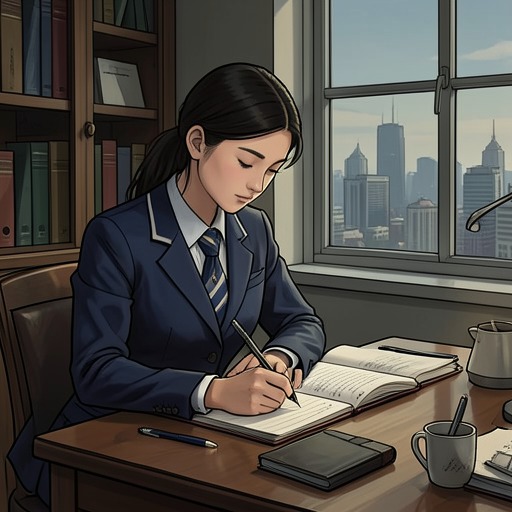
The two deaths turn Maynard’s anxiety into a collective condition. Zoe’s father says that the streets were empty when he drove to the supermarket; at night, residents stay inside. For Zoe, the thought that the killer remains at large is frightening, yet she cannot stop thinking about the case. Her habit of reading thrillers and mysteries becomes entangled with a real investigation unfolding close to home. She cuts a newspaper article out and tapes it into Zoe’s Maynard scrapbook, preserving the account and rereading it even as she is prepared to hide the scrapbook if her parents enter.
The case’s effects also appear in what Zoe cannot feel. When the principal announces that Clara, the older sister of Zoe’s schoolmate Nora, has been killed, students around her cry and react with shock. Zoe remembers having been friends with Nora when they were six and having visited her home; Clara, four years older than Zoe, remains in her memory as a beautiful girl Nora admired. At Clara’s funeral, Zoe tries to summon grief and worries that her emotional numbness means something is wrong with her. She has been borrowing books about serial killers and collecting articles about the murderer, and she fears that her lack of tears makes her like the person who killed Clara. The school counselor has told students that people grieve differently, but Zoe cannot make that reassurance fit her own response.
The funeral’s quiet details sharpen the separation between Zoe’s inner state and the grief around her. She sees Clara’s face in the coffin and thinks that Clara looks asleep, not as Zoe imagines a brutally murdered person should look. Andrea holds Zoe’s hand and later rests her head against Zoe’s arm in the car, playing with Zoe’s fingers as she sometimes does at night. Zoe says nothing. Her mother cries beside her, while Zoe experiences emptiness and disorientation rather than the feeling she believes the occasion requires. These reactions do not make her indifferent to the danger: they deepen her fear that her fascination with the killings has placed her outside ordinary sympathy.
Investigation, suspicion, and uncertainty
The investigation does not give the town a clear answer. Newspaper coverage offers little detail about progress and no confirmed explanation for Beth’s death. When asked whether Jackie was killed by the same person, police say they are still investigating all possibilities. That caution matters: the public may speak of multiple murders as a single case, but the available reporting does not settle the connection. Zoe’s scrapbook and reasoning grow from a record that is both emotionally powerful and incomplete.
Later, Zoe names Rod Glover to a person who checks a file and rejects him as a suspect. The reason offered is a list of seventy-eight people who took part in the search for Clara, including Glover; the search’s timing is said to correspond with the time of death, giving him an alibi. The response warns Zoe not to keep telling people that her neighbor is a serial killer and tells her to leave policing to adults. The scene establishes what officials believe and why they dismiss her accusation; it does not, by itself, verify every assumption behind the alibi. For Zoe, being brushed aside compounds the isolation of being a fourteen-year-old trying to make her observations count.
Another explanation gains traction around Manny Anderson. Officer Will Shepherd describes him as a solitary young man with few friends, unusual cartoons in his notebooks, and a habit of playing Dungeons and Dragons with friends; he also notes that Manny has never had a girlfriend. Zoe sees no meaningful connection between those traits and the killings. She recognizes in the reasoning the danger of finding a person who loosely fits a suspicion and then making the available details support it. Her anger comes not from proving the case herself, but from seeing weak impressions treated as though they add up to evidence.
Narrative significance
The killings are presented through their uneven passage into a child’s understanding: a neighbor’s conversation, a newspaper photograph, a searcher’s account, family precautions, and a funeral. Each source changes what Zoe can picture, but none supplies a complete or consistently reliable account. Rumor fills the gaps left by sparse reporting, while the police’s uncertainty and the town’s fear coexist rather than resolve one another. The result is a case experienced not only as a sequence of deaths but as a disturbance of everyday life and of the ways a community decides what it knows.
Zoe’s response is part of that disturbance. She is frightened by the murders and fascinated by them; she records articles and tries to reason from what she has gathered, even as adults discount her. At Clara’s funeral, she measures herself against the grief of others and worries that numbness makes her resemble the killer. Meanwhile, Andrea’s small gestures of trust and her mother’s attempts to keep the girls safe show the intimate relationships the murders unsettle. The Maynard serial killings thus become, for Zoe, both an external threat and a test of how she understands evidence, empathy, and her own reactions.